
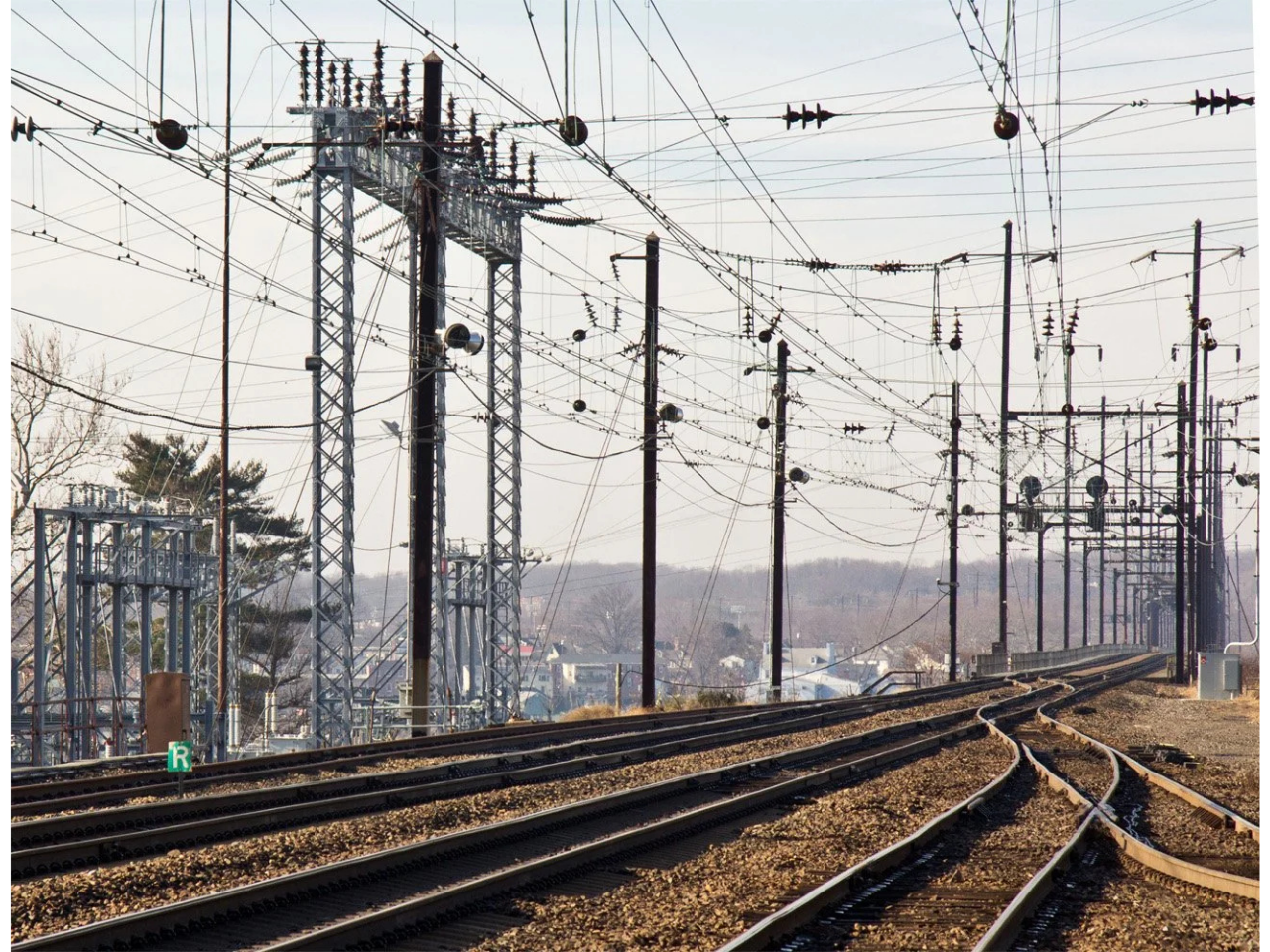
Railway catenary and portal systems are essential infrastructure components that enable power transmission in electrified train lines. Catenary systems consist of contact wires, insulators, carrier ropes, suspension systems, and support poles, allowing trains to receive electrical energy through their pantographs. For safe and uninterrupted operation, catenary portals are designed as high-strength steel structures capable of withstanding horizontal and vertical loads, as well as wind, vibration, and electrical stress. Their production complies with EN 50119, EN 1090-2, ISO 1461 (galvanizing), and UIC 799 standards.
Applications
Catenary and portal systems are used in electrified railway lines, commuter and high-speed train networks, metro systems, and industrial rail transport infrastructures. These structures ensure the safe transmission of power linesacross defined spans and maintain mechanical tension balance along the route. Portal systems can be produced as single-span, double-span, lattice, or tubular types, and are designed according to the specific track geometry of each project.
As part of project-specific engineering studies, parameters such as wind loads, span distances, grounding conditions, anchoring systems, and site topography are carefully analyzed during the design process. When necessary, additional components such as cable channels, insulation joints, or maintenance platforms are integrated onto the galvanized steel structures. This ensures a highly reliable, safe, and long-lasting electrified railway infrastructure.

